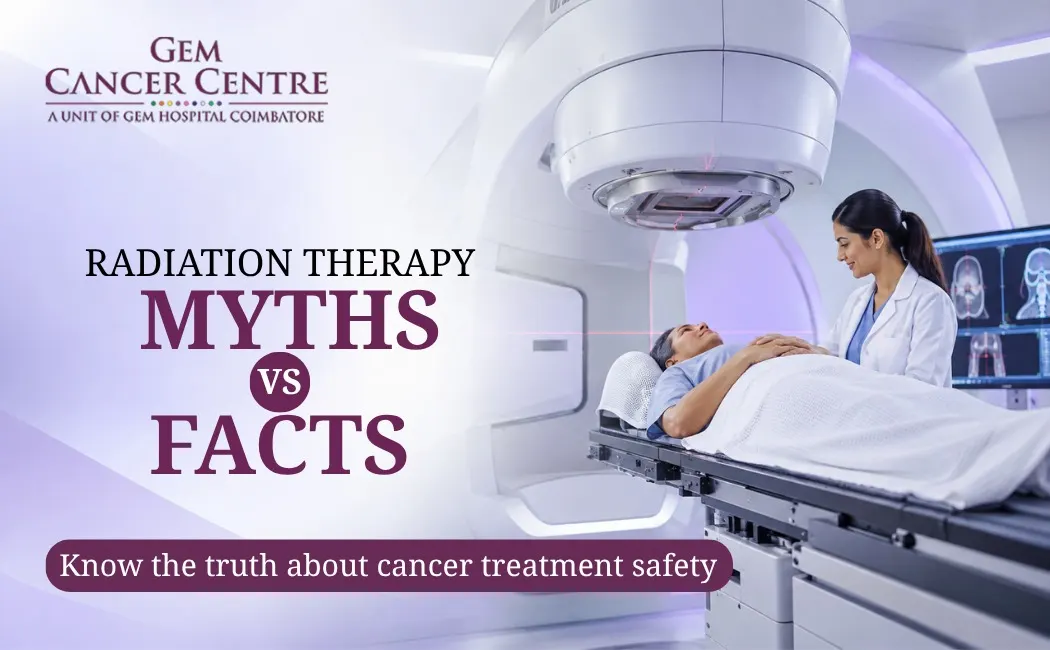
A cancer diagnosis can bring many questions, and radiation therapy is one of the treatments that often creates fear and uncertainty among patients and families.
One of the most common concerns patients have is: “Will radiation treatment make me radioactive?”
The answer depends on the type of radiation therapy being given. Understanding how radiation works can help remove unnecessary fears and help patients approach treatment with confidence.
Radiation therapy is a widely used cancer treatment that uses controlled doses of high-energy radiation to destroy cancer cells or stop their growth. It is carefully planned by specialists to target cancer while protecting nearby healthy tissues.
For patients looking for guidance from a Cancer Hospital in Coimbatore, understanding radiation safety, treatment methods, and precautions can help make informed decisions.
What is radiation therapy?
Radiation therapy uses energy to destroy cancer cells
Radiation therapy is a cancer treatment that uses high-energy radiation to damage the DNA of cancer cells.
When cancer cells cannot repair this damage, they stop multiplying and eventually die.
Radiation therapy may be used:
- As the main cancer treatment
- Before surgery to shrink a tumour
- After surgery to destroy remaining cancer cells
- Along with chemotherapy in certain cases
- To control symptoms in advanced cancer
The treatment plan depends on the type, location, and stage of cancer.
Does radiation therapy make you radioactive?
No, external radiation does not make you radioactive
One of the biggest myths about radiation therapy is that patients become radioactive after treatment.
This is not true for external beam radiation therapy.
During external radiation treatment, radiation is delivered from a machine outside the body. Once the treatment session is completed, there is no radiation remaining inside the patient's body.
Patients can safely interact with family members, friends, and children after external radiation sessions.
What are the different types of radiation therapy?
Radiation can be external or internal
Radiation therapy is broadly divided into two types:
External Beam Radiation Therapy
This is the most common type of radiation treatment.
A specialised machine delivers radiation beams from outside the body to the cancer area.
Examples include:
- IMRT (Intensity-Modulated Radiation Therapy)
- IGRT (Image-Guided Radiation Therapy)
- Stereotactic Radiation Therapy
Patients are not radioactive after external beam treatment.
Internal Radiation Therapy (Brachytherapy)
Internal radiation therapy involves placing a radioactive source close to or inside the tumour area.
Because a radioactive material is used temporarily or permanently in certain treatments, doctors may provide specific safety instructions depending on the procedure.
The precautions vary based on:
- Type of radioactive source used
- Duration of treatment
- Cancer location
- Individual treatment plan
Can I be around my family after radiation therapy?
Yes, most patients can be with family safely
For external radiation therapy, patients do not need to isolate themselves after treatment.
They can usually:
- Spend time with family
- Hug loved ones
- Sleep in the same room
- Continue normal daily activities
For certain internal radiation treatments, doctors may recommend temporary precautions.
Your radiation oncology team will provide clear instructions based on your specific treatment.
Is radiation therapy dangerous for family members?
No, treated patients do not expose others
A common misconception is that radiation from treatment stays in the patient's body and affects others.
With external radiation therapy, this does not happen.
Radiation oncologists carefully calculate treatment doses and use advanced technology to deliver radiation precisely to the cancer area while limiting exposure to healthy tissues.
What are common side effects of radiation therapy?
Side effects depend on treatment area
Radiation therapy side effects vary from person to person depending on:
- Area being treated
- Radiation dose
- Duration of treatment
- Individual health condition
Possible side effects may include:
- Fatigue
- Skin changes near the treatment area
- Mild swelling
- Appetite changes
- Temporary discomfort in the treated area
Most side effects can be managed with proper medical guidance and supportive care.
How is radiation therapy planned safely?
Advanced planning protects healthy tissues
Radiation treatment is not given randomly. It involves detailed planning before the first session.
Doctors may use:
- CT simulation scans
- Treatment planning software
- Image guidance technology
- Precise radiation delivery techniques
These methods help radiation oncologists accurately target cancer cells while reducing unnecessary exposure to surrounding healthy organs.
Why do patients need radiation therapy?
Radiation helps control cancer growth
Radiation therapy may be recommended for several reasons:
To destroy cancer cells
Radiation can damage cancer cells and prevent further growth.
To reduce tumour size
It may help shrink tumours before surgery.
To reduce recurrence risk
Radiation may destroy remaining cancer cells after surgery.
To relieve symptoms
In advanced cancers, radiation may help manage pain or other symptoms.
What should patients ask before starting radiation therapy?
Clear communication improves confidence
Before starting treatment, patients can ask:
- What type of radiation therapy will I receive?
- How many sessions are required?
- What side effects should I expect?
- Can I continue my normal activities?
- Are there any precautions for my family?
- How will treatment response be monitored?
Understanding the treatment plan helps patients feel more prepared throughout their cancer journey.
Why choose expert radiation care?
Specialists ensure safe treatment planning
Radiation therapy requires careful planning, advanced technology, and specialist expertise.
A specialised cancer centre provides access to:
- Radiation oncologists
- Medical physicists
- Radiation therapists
- Advanced treatment planning systems
- Supportive care teams
At GEM Cancer Centre, radiation treatment is planned using a patient-focused approach, combining advanced technology with specialist care.
For individuals searching for a reliable Cancer Hospital in Coimbatore, understanding treatment safety and having access to experienced oncology teams can provide confidence during treatment.
FAQs
Does radiation therapy make a person radioactive?
No. External beam radiation therapy does not make a person radioactive. After the treatment session ends, no radiation remains in the body, and patients can safely interact with others.
Is radiation therapy painful?
Radiation therapy itself is usually painless. Patients may lie still while the treatment machine delivers radiation. Some side effects may develop over time depending on the treatment area.
Is radiation therapy safe for cancer treatment?
Yes. Radiation therapy is a well-established cancer treatment. Modern planning techniques help doctors target cancer cells accurately while protecting nearby healthy tissues.
How long does radiation therapy treatment take?
The duration depends on the cancer type, treatment goal, and radiation plan. Some treatments may require several sessions over multiple weeks, while others may involve fewer sessions.
Where can I get radiation treatment in Coimbatore?
Patients looking for expert radiation care can consult a trusted Cancer Hospital in Coimbatore such as GEM Cancer Centre for specialist evaluation and personalised treatment planning.
Final Note
Radiation therapy is an important cancer treatment that has helped millions of patients worldwide. However, myths and misunderstandings about radiation can create unnecessary fear.
External radiation treatment does not make patients radioactive, and most patients can continue their daily activities with proper medical guidance.
Understanding the treatment process, asking questions, and working closely with an experienced oncology team can help patients approach radiation therapy with greater confidence.