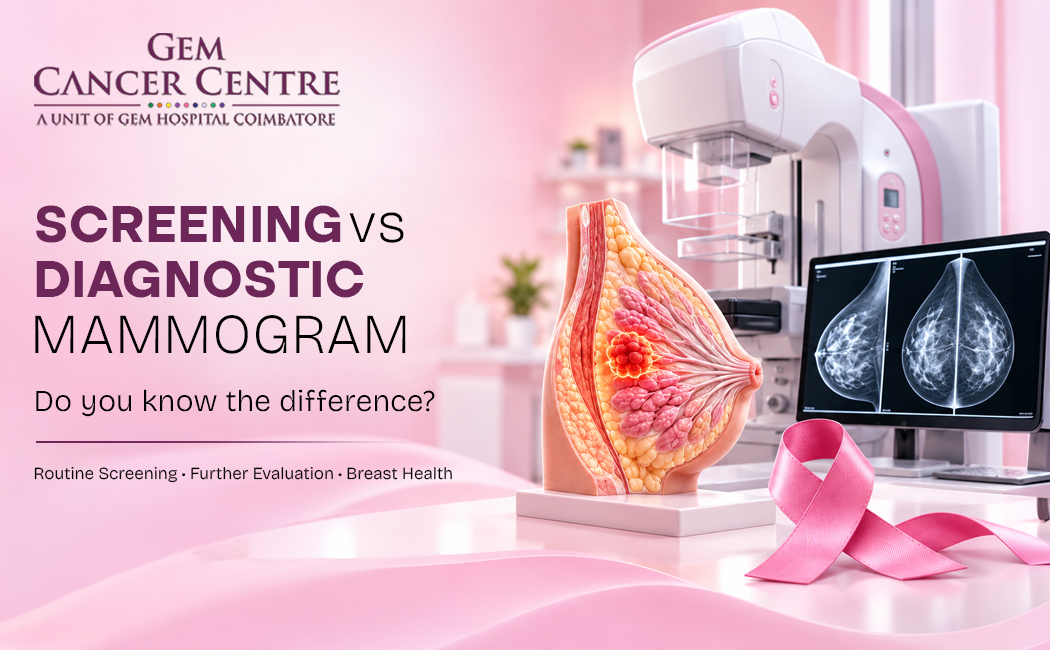
A mammogram is a specialised breast imaging test used to examine breast tissue and identify changes that may need further evaluation. If you have never had one before, it is natural to wonder how the procedure is performed, whether it is painful, how long it takes and what you should do before the test.
A mammogram uses low-dose X-rays to create images of the breast. It may be recommended as part of routine screening or to investigate a breast symptom or an abnormality found during another examination.
For women planning a Mammogram Test in Coimbatore, understanding each step of the procedure can make the experience more comfortable and less stressful.
At GEM Cancer Centre, breast imaging is supported by appropriate specialist evaluation and follow-up when further investigation is required.
What Is a Mammogram?
A mammogram uses low-dose X-rays to image breast tissue.
A mammogram is an X-ray examination designed specifically for the breasts. It produces images that allow radiologists to look for changes in breast tissue that may not be noticeable during a physical examination.
Mammography can be used for two main purposes:
- Screening mammography for women without specific breast symptoms
- Diagnostic mammography when a symptom or previous imaging finding needs further evaluation
The type of mammogram recommended depends on your individual circumstances.
How Is a Mammogram Test Performed?
The breast is briefly compressed during X-ray imaging.
A mammogram is performed using a specialised mammography machine. The procedure involves positioning and briefly compressing each breast between two plates while X-ray images are taken.
The process generally follows these steps:
1. Changing Before the Examination
You will usually be asked to remove clothing from the waist up and wear a gown provided by the imaging centre.
2. Positioning the Breast
The technologist positions one breast on the imaging platform of the mammography machine.
3. Brief Breast Compression
The breast is gently compressed between two plates. This lasts for only a few seconds while the image is captured.
4. Taking the X-Ray Image
The machine produces an X-ray image of the breast tissue.
5. Repeating the Process
The breast is repositioned to obtain additional views. The same process is then performed for the other breast.
6. Image Review
The images are checked to make sure they are suitable for interpretation. Additional images may sometimes be required.
Why Is Breast Compression Necessary During a Mammogram?
Compression spreads tissue and improves image quality.
Breast compression is an important part of mammography.
It helps:
- Spread breast tissue
- Reduce overlapping tissues
- Minimise movement
- Improve image clarity
- Reduce the amount of radiation needed
Compression may feel uncomfortable or create pressure, but it generally lasts only for a short period during each image.
If you experience significant discomfort, inform the technologist.
Does a Mammogram Hurt?
Some women feel brief pressure or discomfort.
Every woman's experience is different.
The compression used during mammography can cause temporary discomfort, but the sensation usually lasts only a few seconds for each image.
Discomfort may vary depending on:
- Breast sensitivity
- Hormonal changes
- Individual pain tolerance
- Previous breast surgery
If you are concerned about discomfort, tell the mammography professional before the examination.
How Long Does a Mammogram Take?
The actual imaging usually takes only a few minutes.
The mammogram itself is generally a short procedure. However, the complete appointment may take longer because of registration, changing, positioning, image review and additional views if required.
If you are undergoing a diagnostic mammogram, additional images may be taken to investigate a specific area.
How Should You Prepare for a Mammogram?
Simple preparation can make the procedure easier.
A mammogram generally does not require fasting or complicated preparation.
Before your appointment:
- Wear comfortable clothing
- Avoid deodorant or powder around the breasts and underarms on the day of the examination
- Inform the imaging team if you have breast implants
- Tell them if you are pregnant or may be pregnant
- Bring previous mammogram reports or images if available
- Inform the team about any current breast symptoms
Following these simple steps can help the imaging team obtain appropriate images.
Can You Wear Deodorant Before a Mammogram?
Avoid deodorant and powders on the test day.
Some deodorants, powders, creams or lotions may contain substances that can appear as small particles on an X-ray image.
These can sometimes make image interpretation more difficult.
For this reason, it is generally advisable to avoid applying these products to the breast or underarm area on the day of your mammogram unless your imaging centre gives different instructions.
Can You Have a Mammogram During Your Period?
Timing may depend on breast tenderness and comfort.
A mammogram can generally be performed during the menstrual cycle.
However, some women experience increased breast tenderness around their period. Compression may therefore feel more uncomfortable during this time.
If you have flexibility in scheduling, you may discuss a suitable time with the imaging centre.
The most important consideration is completing the recommended examination rather than unnecessarily delaying it.
Can Women With Breast Implants Have a Mammogram?
Yes, women with implants can undergo mammography.
Breast implants do not automatically prevent a woman from having a mammogram.
Additional imaging views may be needed to examine the breast tissue appropriately.
Always inform the technologist about your implants before the procedure so appropriate positioning and imaging techniques can be considered.
What Happens After the Mammogram?
A radiologist reviews the images for breast changes.
Once the images are obtained, they are reviewed by a qualified radiologist.
The report may indicate that no concerning abnormality was identified or that an area requires additional evaluation.
Depending on the findings, your doctor may recommend:
- Routine screening
- Additional mammogram views
- Breast ultrasound
- Diagnostic imaging
- Breast MRI in selected situations
- Biopsy when clinically necessary
An additional test does not automatically mean that cancer has been detected.
Does an Abnormal Mammogram Mean Cancer?
No, many abnormal findings are not cancer.
An abnormal mammogram can occur for several reasons.
Possible findings may include:
- Cysts
- Benign growths
- Calcifications
- Normal tissue variations
- Other non-cancerous changes
If an area appears unclear or suspicious, additional imaging can help doctors understand it more accurately.
A biopsy may be recommended when tissue examination is necessary to determine the cause.
What Is the Difference Between a Screening and Diagnostic Mammogram?
Screening looks for changes; diagnostic tests investigate them.
A screening mammogram is generally performed when a woman has no specific breast symptoms.
A diagnostic mammogram is performed when there is a particular concern, such as:
- A new breast lump
- Nipple discharge
- Skin changes
- A previous abnormal mammogram
- Another breast abnormality requiring assessment
Diagnostic mammography may involve additional or specialised X-ray views.
When Should You Consider a Mammogram?
Screening depends on age, risk and medical history.
The appropriate timing of mammography varies between individuals.
Your doctor may consider:
- Age
- Family history of breast cancer
- Genetic risk
- Previous breast conditions
- Personal medical history
- Previous imaging results
Women at increased risk may require a different screening strategy.
Rather than following a screening schedule based only on someone else's experience, discuss your individual needs with a healthcare professional.
What If You Notice a Breast Lump Before Your Mammogram?
Do not wait for routine screening to seek advice.
If you notice a new breast lump or another unusual change, inform your doctor.
Other changes that should be evaluated include:
- Nipple discharge
- Nipple inversion
- Skin dimpling
- Breast swelling
- Change in breast shape
- Persistent breast pain
- Underarm swelling
A mammogram may be part of the evaluation, but your doctor may also recommend an ultrasound or other tests depending on the finding.
Why Is Regular Breast Screening Important?
Screening can identify changes before symptoms appear.
Breast cancer does not always cause a noticeable lump or other symptoms in its early stages.
Mammography can help identify certain breast changes before they become apparent.
However, screening does not replace awareness. Women should still report new breast changes even if their previous mammogram was normal.
For women looking for a Mammogram Test in Coimbatore, timely screening and appropriate follow-up can form an important part of proactive breast health care.
Why Choose GEM Cancer Centre for Breast Imaging?
Specialist support helps guide the next steps.
Breast imaging is not simply about taking an X-ray. When an abnormality is identified, patients may need further imaging, specialist assessment or additional diagnostic procedures.
GEM Cancer Centre provides breast imaging and specialist-led evaluation, helping patients understand their findings and appropriate next steps.
Where further treatment is required, patients can also receive coordinated oncology care based on their diagnosis.
FAQs
How is a mammogram test performed?
During a mammogram, each breast is positioned and briefly compressed between two plates. Low-dose X-ray images are then taken from different angles to examine the breast tissue.
Is a mammogram painful?
A mammogram may cause temporary pressure or discomfort because the breast is compressed. The compression usually lasts only a few seconds for each image.
How long does a mammogram take?
The actual mammogram usually takes only a few minutes. The total appointment may take longer if additional images or diagnostic evaluation are required.
Can I eat before a mammogram?
Yes. Fasting is generally not required before a mammogram, unless your healthcare provider has specifically given different instructions.
Can I use deodorant before a mammogram?
It is generally advisable to avoid deodorant, powder, creams or lotions around the breasts and underarms on the day of the test because some products can affect the appearance of X-ray images.
Can women with breast implants have a mammogram?
Yes. Women with breast implants can undergo mammography. Additional imaging views may be used, so inform the technologist about your implants before the examination.
What happens if a mammogram shows an abnormality?
An abnormal result does not automatically mean cancer. Additional mammography, ultrasound, MRI or biopsy may be recommended depending on the imaging findings.
Is a mammogram only needed when there is a lump?
No. Screening mammography can identify certain breast changes before they become noticeable. Women with symptoms should also seek medical evaluation rather than waiting for routine screening.
Where can I get a Mammogram Test in Coimbatore?
Women looking for a Mammogram Test in Coimbatore can consult GEM Cancer Centre for breast imaging, specialist evaluation and appropriate follow-up when required.
Final Note
A mammogram is a relatively quick breast imaging procedure, but knowing what happens during each step can make the experience much easier.
From preparation and positioning to brief compression and image review, the process is designed to obtain clear images of breast tissue. If an abnormality is identified, additional evaluation may be recommended to understand its cause.
Remember that an abnormal mammogram does not automatically mean cancer. The appropriate next step depends on the imaging findings, symptoms and individual risk factors.
If you have been advised to undergo a Mammogram Test in Coimbatore, discussing the procedure and your individual screening needs with a healthcare professional can help you approach the test with greater confidence.