A diagnosis of stomach cancer can leave patients and families with many questions. What treatment will be needed? Will surgery be necessary? Is chemotherapy required? Could targeted therapy or immunotherapy help? How long will treatment take?
The answer is that stomach cancer treatment is not the same for every patient.
Doctors consider several factors before recommending a treatment plan. These include the location and size of the tumour, cancer stage, lymph-node involvement, whether the disease has spread, tumour biology, molecular test results, nutritional status and the patient's overall health.
For patients researching Stomach Cancer Treatment in Coimbatore, understanding these factors can make consultations easier and help families understand why one treatment approach may be recommended over another.
At GEM Cancer Centre, stomach cancer care is provided through a multidisciplinary approach involving gastrointestinal oncology, medical oncology, surgical oncology, radiation oncology, pathology, radiology, nutrition and supportive-care specialists.
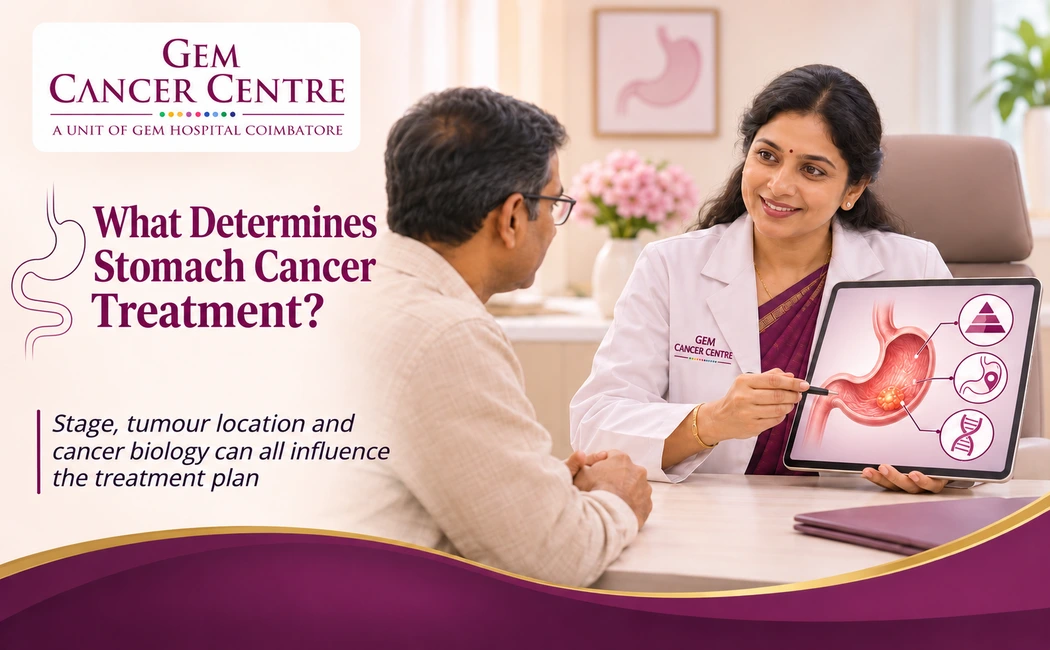
What Determines Stomach Cancer Treatment?
Stomach cancer treatment is mainly determined by the cancer stage, tumour location, tumour biology and the patient's overall health.
There is no single treatment that works for every person with gastric cancer.
Before treatment begins, doctors need to understand exactly what type of stomach cancer is present and how far it has progressed.
The treatment plan may depend on:
Tumour location
Tumour size
Depth of invasion
Lymph-node involvement
Distant spread
Pathology findings
HER2 status
MSI or related molecular findings
PD-L1 status where relevant
Nutritional condition
Other medical conditions
Previous treatments
The patient's ability to undergo surgery or other therapies
This is why two people with stomach cancer may receive completely different treatment plans.
Why Does the Stage of Stomach Cancer Matter?
Cancer stage helps doctors understand how far the disease has progressed and which treatments may be appropriate.
Staging can provide information about:
How deeply the tumour has grown into the stomach wall
Whether nearby lymph nodes are involved
Whether the cancer has reached surrounding structures
Whether it has spread to distant organs
A cancer that is confined to the stomach may be approached very differently from cancer that has spread to other parts of the body.
For some patients, surgery may be an important part of treatment.
For others, chemotherapy or another systemic treatment may be needed before surgery or as the main treatment.
This makes accurate staging an important first step in planning Stomach Cancer Treatment in Coimbatore.
How Does the Location of the Stomach Tumour Affect Treatment?
The location of the tumour can influence the type of surgery and other treatments recommended.
Stomach cancer can occur in different parts of the stomach, including the upper, middle or lower regions.
The location may affect:
Whether part or most of the stomach needs to be removed
The type of surgical procedure
The relationship of the tumour with nearby structures
The extent of lymph-node surgery
Reconstruction of the digestive tract
For selected patients with localised disease, surgeons may consider a partial gastrectomy when appropriate.
In other situations, a total gastrectomy may be required.
The goal is to remove the cancer adequately while considering the patient's long-term digestive function and quality of life.
What Tests Are Needed Before Stomach Cancer Treatment?
Doctors use endoscopy, biopsy, imaging and selected molecular tests to understand the cancer before treatment.
A typical evaluation may include several investigations.
Upper GI Endoscopy
Endoscopy allows the specialist to examine the lining of the stomach and identify suspicious areas.
Biopsy
A tissue sample obtained during endoscopy can be examined by a pathologist to confirm the diagnosis and determine the type of cancer.
CT Scan
CT imaging can help assess the tumour and look for involvement of lymph nodes or other organs.
PET-CT
PET-CT may be useful in selected patients to provide additional information about metabolic activity and possible spread.
Endoscopic Ultrasound
Endoscopic ultrasound can provide detailed information about the depth of tumour invasion and nearby lymph nodes in appropriate cases.
Diagnostic Laparoscopy
In selected situations, laparoscopy may be used to look for disease within the abdominal cavity that may not be obvious on routine imaging.
GEM Cancer Centre's existing article on how stomach cancer is diagnosed in Coimbatore provides a more detailed explanation of these diagnostic steps.
Why Are HER2, MSI and PD-L1 Tests Important?
Molecular and biomarker testing can help identify stomach cancer patients who may benefit from specific targeted treatments or immunotherapy.
Modern stomach cancer care is increasingly influenced by the biological characteristics of the tumour.
Depending on the individual case, doctors may consider testing for markers such as:
HER2
MSI or mismatch-repair status
PD-L1
These results can help the oncology team determine whether certain targeted medicines or immunotherapy approaches may be appropriate.
This is an important part of precision oncology because treatment decisions are increasingly based not only on where the cancer is located, but also on how the tumour behaves biologically.
When Is Surgery Used for Stomach Cancer?
Surgery is an important treatment option when stomach cancer can be removed safely.
The type of operation depends on the tumour's location and extent.
Surgery may involve removing:
Part of the stomach
Most of the stomach
The entire stomach in selected cases
Nearby lymph nodes
The objective is to remove the cancer with appropriate margins and manage regional lymph-node disease while preserving as much healthy function as possible.
Surgery may not always be the first step.
Some patients may receive chemotherapy or other treatment before an operation to reduce the tumour or address microscopic disease.
What Is Robotic Gastrectomy?
Robotic gastrectomy is a minimally invasive surgical approach that may be suitable for selected patients with stomach cancer.
During robotic surgery, the surgeon operates through small incisions using specialised instruments and a robotic surgical platform.
Potential advantages of minimally invasive surgery can include:
Smaller surgical incisions
Reduced blood loss in appropriate cases
Less postoperative discomfort
Potentially shorter hospital recovery
Earlier return to routine activities
However, robotic surgery is not automatically the best option for every patient.
The surgical approach should be determined by tumour location, cancer stage, anatomy, previous surgery and the surgeon's assessment.
GEM Cancer Centre's stomach cancer service specifically describes robotic gastrectomy as an option for eligible patients with localised stomach cancer.
Does Every Stomach Cancer Patient Need Chemotherapy?
No. Chemotherapy is recommended according to the stage, tumour characteristics and overall treatment strategy.
Chemotherapy may be used:
Before surgery
After surgery
Alongside other treatments
As the primary treatment for advanced disease
When given before surgery, chemotherapy may be intended to reduce tumour burden and treat microscopic disease.
After surgery, chemotherapy may be used to reduce the risk of cancer returning in appropriate patients.
For advanced stomach cancer, systemic therapy may become a central part of disease management.
The specific medicines and treatment schedule depend on the patient's diagnosis and overall health.
When Can Targeted Therapy Be Used?
Targeted therapy may be considered when the tumour has a biomarker that makes it susceptible to a specific targeted medicine.
One example is HER2-positive stomach cancer.
If testing confirms a relevant biomarker, the oncology team may consider targeted treatment as part of the patient's overall plan.
This is why molecular testing can be important before treatment decisions are finalised.
Targeted therapy is not suitable for every stomach cancer patient.
Its use depends on the tumour's biological characteristics and the stage of disease.
Can Immunotherapy Be Used for Stomach Cancer?
Immunotherapy may be appropriate for selected patients depending on tumour characteristics and treatment setting.
Immunotherapy works differently from traditional chemotherapy.
Instead of directly attacking cancer cells in the same way as chemotherapy, certain immunotherapy medicines help the immune system recognise and respond to cancer.
Its suitability may depend on factors such as:
Tumour biomarkers
Disease stage
Previous treatments
Overall health
Treatment goals
The oncology team evaluates these factors before recommending immunotherapy.
Is Radiation Therapy Used for Stomach Cancer?
Radiation therapy may be considered for selected stomach cancer patients depending on the stage and treatment plan.
Radiation uses high-energy treatment to target cancer cells.
It may have a role in certain situations, including selected patients receiving combined treatment or those requiring symptom control.
Radiation is not automatically required for every stomach cancer patient.
Its role is determined by the multidisciplinary team after reviewing the diagnosis, stage and other treatment options.
What Happens When Stomach Cancer Has Spread?
When stomach cancer has spread to distant organs, treatment usually focuses more heavily on systemic therapies and disease control.
Advanced stomach cancer may require treatment such as:
Chemotherapy
Targeted therapy
Immunotherapy
Combination approaches
Supportive and palliative care
In selected patients with disease involving the abdominal cavity, specialised procedures such as cytoreductive surgery and HIPEC may be considered.
These approaches are not suitable for every patient.
The decision depends on the location and extent of disease, overall health and the potential benefits and risks of treatment.
How Does Nutrition Affect Stomach Cancer Treatment?
Nutritional status is an important consideration before, during and after stomach cancer treatment.
The stomach plays an important role in digestion, so surgery and cancer treatment can affect eating patterns and nutritional needs.
Some patients may experience:
Reduced appetite
Early fullness
Weight loss
Difficulty maintaining calorie intake
Changes in digestion
Nutritional support may include:
Smaller, frequent meals
Adequate protein
Appropriate fluid intake
Individualised dietary advice
Monitoring of weight and nutritional status
Patients should not follow restrictive diets without discussing them with their oncology or nutrition team.
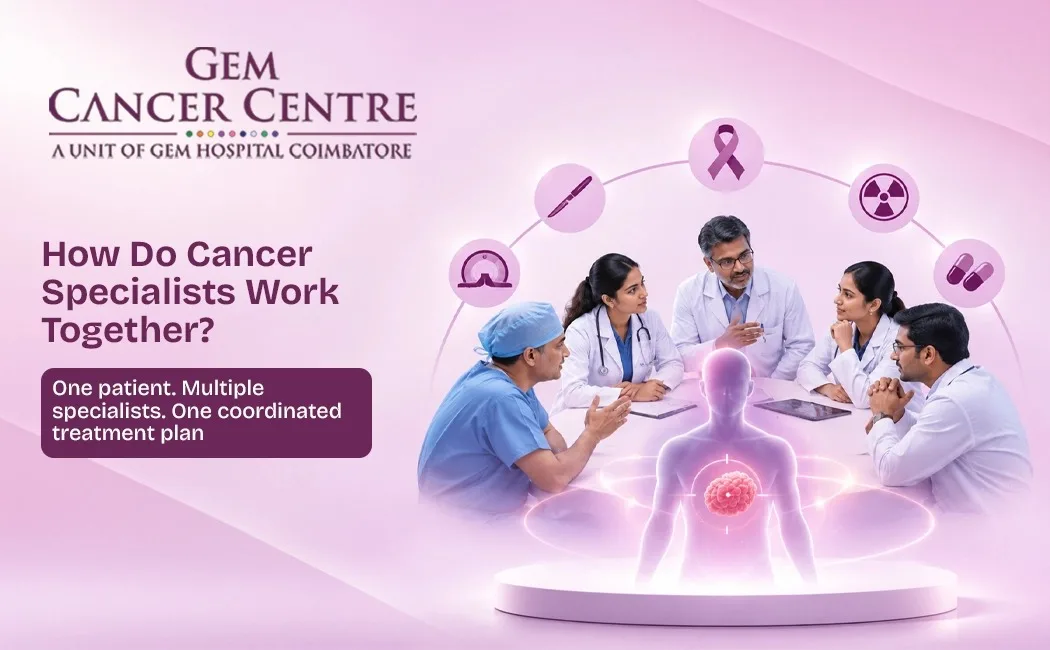
How Does a Multidisciplinary Team Decide the Treatment?
A multidisciplinary team combines surgical, medical, radiation, pathology and diagnostic expertise to develop an individual treatment plan.
A stomach cancer treatment team may include:
Gastrointestinal surgical oncologists
Medical oncologists
Radiation oncologists
Gastroenterologists
Radiologists
Pathologists
Nuclear medicine specialists
Nutritionists
Oncology nurses
Rehabilitation and supportive-care professionals
The team can review the patient's biopsy, scans, stage, molecular findings and general health before recommending a treatment sequence.
This approach is particularly useful when treatment involves several different therapies.
Why Is Personalised Treatment Important?
Personalised treatment helps doctors select therapies according to the patient's cancer and individual medical needs.
A treatment plan may change depending on:
Stage
Tumour location
Molecular profile
Nutritional status
Age
Other medical conditions
Previous treatments
Response to treatment
Patient preferences
This means that a treatment plan seen online or recommended to another patient may not be appropriate for you.
The right approach is the one developed after reviewing your own diagnosis and medical information.
For patients exploring Stomach Cancer Treatment in Coimbatore, a detailed specialist consultation is an important step before making treatment decisions.
What Do Patients Say About Their Experience at GEM Cancer Centre?
Patient feedback can provide useful insight into how people experience communication and support during cancer care, although individual experiences can vary.
Public patient feedback about GEM Cancer Centre includes positive comments about clear communication and supportive care.
One patient review described the doctors as explaining the “treatment plan clearly” and answering questions patiently.
Another review highlighted the team's “kindness, patience, and gentle approach” during a difficult treatment period.
These comments relate to patients' overall experiences at the cancer centre and are not specifically claims about stomach cancer treatment.
For someone evaluating a cancer centre, these experiences can be considered alongside the centre's medical expertise, available services, diagnostic facilities and multidisciplinary approach.
What Should Patients Ask Before Starting Stomach Cancer Treatment?
Patients should understand their cancer stage, treatment goal, recommended sequence and available options before treatment begins.
Consider asking your specialist:
What type of stomach cancer do I have?
What stage is the cancer?
Where exactly is the tumour located?
Has it spread to lymph nodes or other organs?
Do I need molecular or biomarker testing?
Will I need surgery?
Could robotic surgery be suitable?
Do I need chemotherapy before surgery?
Will I need chemotherapy after surgery?
Is radiation therapy recommended?
Could targeted therapy or immunotherapy be appropriate?
What nutritional support will I need?
How long might treatment take?
What side effects should I expect?
How will my response to treatment be monitored?
Writing these questions down before your appointment can help ensure that important concerns are addressed.
How Can Patients Choose the Right Stomach Cancer Specialist in Coimbatore?
Look for a cancer centre that can provide coordinated diagnosis, treatment planning, surgery, systemic therapy and supportive care.
When considering Stomach Cancer Treatment in Coimbatore, patients can look for:
Gastrointestinal oncology expertise
Medical oncology
Surgical oncology
Radiation oncology
Advanced endoscopy
CT and PET-CT imaging
Pathology
Molecular testing
Minimally invasive or robotic surgery where appropriate
Nutritional support
Rehabilitation
Multidisciplinary treatment planning
GEM Cancer Centre's dedicated stomach cancer service brings these areas together under a gastrointestinal oncology model.
You can also explore the centre's stomach cancer treatment services to understand the diagnostic and treatment options described for eligible patients.
Frequently Asked Questions
What determines stomach cancer treatment?
Treatment is mainly determined by the cancer stage, tumour location, pathology, molecular characteristics and the patient's overall health.
Is surgery always required for stomach cancer?
No. Surgery is an important treatment for many localised cancers, but the need for surgery depends on the stage and whether the tumour can be safely removed.
Is chemotherapy needed before stomach cancer surgery?
It may be recommended for selected patients. The decision depends on the stage, tumour characteristics and overall treatment strategy.
Can stomach cancer be treated with immunotherapy?
Yes, selected patients may benefit from immunotherapy. Suitability depends on tumour characteristics, disease stage and the overall treatment plan.
What is robotic gastrectomy?
Robotic gastrectomy is a minimally invasive operation used to remove part or all of the stomach in selected patients. The suitability depends on the tumour and the patient's individual circumstances.
Why are HER2 and PD-L1 tests performed?
These tests can provide information about tumour biology and help identify patients who may benefit from specific targeted or immune-based treatments.
Does stomach cancer treatment affect eating?
It can. Surgery and other treatments may affect appetite, digestion and meal patterns, making nutritional support an important part of recovery.
How long does stomach cancer treatment take?
Treatment duration varies from patient to patient. It depends on the stage, treatment sequence, chemotherapy cycles, surgery, recovery and response to treatment.
Can stomach cancer treatment be personalised?
Yes. Treatment can be adapted according to tumour characteristics, stage, molecular findings, overall health and individual treatment goals.
Where can I get Stomach Cancer Treatment in Coimbatore?
Patients can consult a specialised gastrointestinal oncology team to discuss diagnosis, staging and personalised treatment options. GEM Cancer Centre provides stomach cancer evaluation and treatment as part of its multidisciplinary oncology services.
Conclusion
There is no single treatment plan for every person diagnosed with stomach cancer.
The right approach depends on where the tumour is located, how deeply it has grown, whether lymph nodes or other organs are involved, the biological characteristics of the cancer and the patient's overall health.
Some patients may require surgery, while others may receive chemotherapy before or after surgery. Selected patients may benefit from robotic gastrectomy, targeted therapy, immunotherapy, radiation therapy or specialised procedures such as HIPEC.
Accurate diagnosis and staging are therefore essential before treatment begins.
For patients considering Stomach Cancer Treatment in Coimbatore, a multidisciplinary approach can bring together gastrointestinal surgeons, medical oncologists, radiation specialists, pathologists, radiologists, nutrition professionals and supportive-care teams.
The goal is not simply to choose a treatment. It is to determine which treatment, in what sequence and for what purpose, is most appropriate for that individual patient.
Understanding these factors can help patients ask better questions, prepare for treatment and participate more confidently in decisions about their cancer care.
If you or someone in your family has been diagnosed with stomach cancer, discuss the diagnosis, stage, treatment options and expected treatment sequence with an experienced oncology team.
Before starting treatment, ask whether additional imaging, pathology or molecular testing is required and understand how surgery, chemotherapy, radiation, targeted therapy or immunotherapy may fit into your individual plan.
For patients looking for Stomach Cancer Treatment in Coimbatore, early specialist evaluation can help turn a complex diagnosis into a clear, personalised treatment pathway.