A cancer diagnosis often leads to an important question: How do doctors know where the cancer is and which treatment is most appropriate?
Imaging plays a major role in answering that question. Among the advanced imaging techniques used in oncology, a PET-CT scan can provide valuable information about both the location and activity of abnormal tissue.
If you have been advised to undergo a PET CT Scan in Coimbatore, understanding why the scan is recommended can make the process easier to understand.
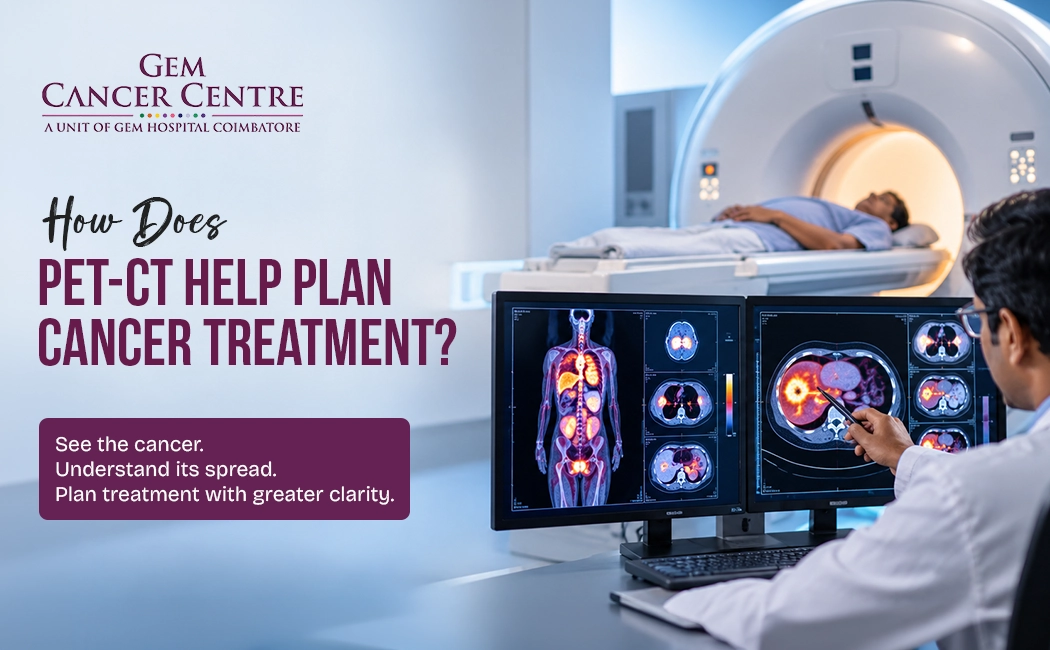
A PET-CT combines two types of imaging in a single examination. PET shows areas of increased metabolic activity, while CT provides detailed anatomical information. When interpreted together, these images can help the medical team assess cancer, determine its extent, plan treatment and evaluate how the disease responds to therapy.
What Is a PET-CT Scan?
PET-CT combines metabolic and anatomical cancer imaging.
PET stands for Positron Emission Tomography, while CT stands for Computed Tomography.
A PET scan uses a small amount of a radioactive tracer, often a glucose-related substance called FDG. Many cancer cells use glucose at a higher rate than some normal tissues, allowing areas of increased tracer uptake to be identified.
The CT component provides detailed images showing the body's internal structures.
Together, the two scans can provide complementary information.
How Does PET-CT Detect Cancer Activity?
PET highlights areas with increased metabolic activity.
After the tracer is administered, the patient rests for a specified period while the tracer distributes through the body.
The PET scanner then detects signals from the tracer.
Areas showing increased uptake may represent increased metabolic activity. Cancer can cause such areas, but increased uptake is not specific to cancer. Inflammation and infection can also produce increased tracer uptake.
This is why PET-CT findings need to be interpreted alongside symptoms, medical history, other imaging and laboratory findings.
Why Is PET-CT Important for Cancer Staging?
PET-CT helps determine how far cancer has spread.
Cancer staging describes the extent of disease.
Doctors may need to know whether cancer is:
- Limited to its original location
- Present in nearby lymph nodes
- Spread to other organs
- Present in multiple areas of the body
PET-CT can help identify areas of abnormal metabolic activity that may not be obvious from symptoms alone.
The information can contribute to determining the stage and may influence the overall treatment strategy.
How Does PET-CT Help Doctors Plan Treatment?
PET-CT helps doctors choose treatment based on disease extent.
Treatment decisions can depend heavily on where cancer is located and whether it has spread.
PET-CT findings may help doctors determine whether a patient may be considered for:
- Surgery
- Radiation therapy
- Chemotherapy
- Immunotherapy
- Targeted treatment
- A combination of treatments
For example, if imaging suggests that a cancer is confined to a particular area, surgery may be considered when clinically appropriate.
If disease is found at multiple sites, the treatment approach may be different.
PET-CT is therefore one part of a larger treatment-planning process.
Can PET-CT Show Whether Surgery Is Possible?
It can provide information that supports surgical planning.
Before major cancer surgery, doctors need to understand the location and extent of disease.
PET-CT can help identify suspicious lymph nodes or distant areas that may influence whether surgery is appropriate.
However, PET-CT does not independently decide whether a patient can undergo surgery.
The surgical team considers the PET-CT along with CT or MRI findings, biopsy results, the patient's overall health and the specific type of cancer.
Can PET-CT Help Plan Radiation Therapy?
Yes, PET-CT can help identify active cancer areas.
Radiation therapy needs to be carefully planned to target cancer while limiting exposure to nearby healthy tissues.
PET information may help identify metabolically active areas, while CT provides anatomical detail.
In selected cancers, this combined information can support radiation treatment planning.
The exact role of PET-CT depends on the cancer type and the treatment protocol being considered.
Can PET-CT Tell If Cancer Treatment Is Working?
PET-CT can help assess treatment response in selected cancers.
A PET-CT may sometimes be performed after treatment has started or completed to evaluate changes in metabolic activity and disease extent.
A reduction in tracer uptake may suggest a response to treatment.
However, PET-CT results must be interpreted carefully.
Treatment-related inflammation can sometimes cause increased tracer uptake, and some cancers may not show strong uptake.
Therefore, doctors consider the scan alongside clinical findings and other investigations.
Can PET-CT Detect Cancer Recurrence?
PET-CT may help investigate suspected cancer recurrence.
After treatment, a new abnormality may represent scar tissue, inflammation or recurrent cancer.
PET-CT can provide metabolic information that may help doctors distinguish between these possibilities in selected situations.
It is not always necessary for routine follow-up. The decision depends on the cancer type, previous treatment, symptoms and clinical findings.
What Is the Difference Between PET and CT?
PET shows activity; CT shows detailed anatomy.
The two technologies provide different types of information.
| PET | CT |
|---|---|
| Shows metabolic activity | Shows anatomical structures |
| Uses a radioactive tracer | Uses X-rays |
| Can identify areas of increased tracer uptake | Shows size, shape and location |
| Helps assess disease activity | Helps identify anatomical abnormalities |
Combining the two can give doctors a more complete picture than either technique alone in situations where PET-CT is clinically appropriate.
When Might a Doctor Recommend PET-CT?
PET-CT is recommended when its information can affect care.
A doctor may consider PET-CT for selected patients when there is a need to:
- Stage certain cancers
- Look for distant spread
- Investigate suspected recurrence
- Assess treatment response
- Clarify findings from other imaging
- Support treatment planning
PET-CT is not required for every cancer or every patient.
The usefulness of the scan depends on the type and stage of cancer.
How Should You Prepare for a PET-CT Scan?
Follow fasting and medication instructions carefully.
PET-CT preparation can vary depending on the type of scan and tracer being used.
For many FDG PET-CT examinations, patients are instructed to avoid eating for a specified period before the scan while continuing to drink plain water as directed.
Patients may also be advised to:
- Avoid strenuous exercise before the scan
- Wear comfortable clothing
- Inform the imaging team about medications
- Inform the team about diabetes
- Tell the team if pregnancy is possible
- Follow specific instructions provided by the centre
Patients with diabetes may require special preparation because blood glucose levels can affect FDG PET imaging.
Always follow the instructions provided by your imaging team rather than relying on general internet advice.
What Happens During a PET-CT Scan?
The scan involves tracer injection, a waiting period and imaging.
The process usually involves several stages.
1. Initial Assessment
The imaging team reviews your medical history and confirms the reason for the examination.
2. Tracer Administration
A small amount of radioactive tracer is administered, usually through an intravenous injection.
3. Resting Period
You will generally rest quietly while the tracer distributes through the body.
Avoiding unnecessary movement and strenuous activity during this period may be important for image quality.
4. PET-CT Imaging
You will lie on the scanning table, which moves through the PET-CT scanner.
It is important to remain still during image acquisition.
5. Image Interpretation
A trained nuclear medicine physician and/or radiologist reviews the images and prepares the report.
Is PET-CT Safe?
PET-CT uses controlled, medically monitored radiation.
PET-CT involves exposure to radiation from both the tracer and the CT component.
The amount is carefully considered against the expected medical benefit of obtaining the information.
The radioactive tracer also decreases in the body over time and is eliminated naturally, mainly through urine.
Patients should tell the medical team if they are pregnant, may be pregnant or are breastfeeding because additional precautions may be required.
Does an Abnormal PET-CT Mean Cancer?
No. Increased PET uptake does not always mean cancer.
This is one of the most important points for patients to understand.
Increased metabolic activity can occur with:
- Infection
- Inflammation
- Some benign conditions
- Recent procedures
- Certain normal tissues
Conversely, some cancers may show relatively low tracer uptake.
Therefore, a PET-CT report should never be interpreted in isolation.
If a suspicious area is identified, doctors may recommend additional imaging, follow-up or biopsy depending on the situation.
How Are PET-CT Results Used by the Cancer Team?
PET-CT findings are combined with other clinical information.
Cancer care is rarely based on one test alone.
Doctors may consider:
- Biopsy results
- Histopathology
- Blood tests
- CT or MRI findings
- PET-CT findings
- Symptoms
- Medical history
- Overall health
The cancer team then uses this information to develop an appropriate treatment plan.
In many cases, cancer care involves several specialists working together.
What Should You Ask Before a PET-CT?
Before undergoing the scan, patients can ask:
- Why has PET-CT been recommended?
- What cancer-related question is the scan expected to answer?
- Do I need to fast?
- Can I take my regular medicines?
- What should I do if I have diabetes?
- How long will the appointment take?
- When will the report be available?
- Will additional tests be needed?
Knowing what to expect can reduce anxiety and help you prepare properly.
Frequently Asked Questions
1. What is a PET-CT scan used for in cancer?
PET-CT helps assess cancer activity and anatomy. It can support diagnosis, staging, treatment planning and treatment-response assessment in selected cancers.
2. Does PET-CT detect all cancers?
No, PET-CT cannot detect every cancer. Some cancers may show low tracer uptake, while inflammation can sometimes look similar to cancer.
3. Is PET-CT better than a CT scan?
PET and CT provide different information. PET shows metabolic activity, while CT provides detailed anatomical images. Combining them can be useful in selected cancer evaluations.
4. Does PET-CT determine cancer stage?
PET-CT can help determine the extent of certain cancers. Doctors combine its findings with biopsy, clinical assessment and other imaging before assigning a final stage.
5. Can PET-CT show whether chemotherapy is working?
It can help assess treatment response in selected cancers. Changes in metabolic activity may provide useful information, but results require expert interpretation.
6. Do I need to fast before PET-CT?
Many FDG PET-CT scans require fasting beforehand. Exact instructions vary, so follow the preparation guidelines provided by your imaging centre.
7. Can I drink water before a PET-CT scan?
Plain water is often permitted during preparation. However, follow the specific instructions given by your PET-CT centre.
8. How long does a PET-CT scan take?
The overall appointment can take several hours. This includes preparation, tracer uptake time and the actual imaging.
9. Is PET-CT painful?
The scan itself is generally painless. You may feel a brief prick when the tracer is injected, and remaining still during imaging is usually the main requirement.
10. What happens if my PET-CT shows an abnormal area?
Your doctor may recommend further evaluation. Depending on the finding, this could include another scan, follow-up imaging, clinical assessment or biopsy.
Conclusion
A PET-CT scan can provide valuable information about both the activity and location of cancer. By combining PET's metabolic information with CT's anatomical detail, doctors can better understand the extent of disease in selected cancers.
This information can contribute to cancer staging, treatment planning and monitoring treatment response.
However, PET-CT is not a standalone cancer diagnosis. Its findings need to be interpreted alongside biopsy results, other imaging, symptoms and the patient's overall medical condition.
If your doctor has recommended a PET CT Scan in Coimbatore, ask why the scan is needed and what information it is expected to provide. Understanding the purpose of the examination can make the process less stressful and help you participate more confidently in your treatment decisions.
Call to Action
If you have been advised to undergo a PET-CT scan as part of your cancer evaluation or treatment, speak with your oncology or imaging team about the purpose of the scan, preparation requirements and how the results will contribute to your care.
The right scan, performed for the right clinical reason and interpreted appropriately, can provide important information at different stages of cancer care.