Best Pancreatic Cancer Treatment in Coimbatore
Despite earning its reputation as one of medicine's most formidable challenges, pancreatic cancer is no longer the sole story. A subset of patients can be cured with surgery. Survival is extending with better systemic therapies. Precision oncology is beginning to identify actionable molecular targets in a cancer once thought to have none. At GEM Cancer Centre in Coimbatore, our pancreatic cancer program focuses on two important facts: how quickly we can start treatment after diagnosis is crucial for whether the cancer can be surgically removed, and the skill of the surgeon is the most important factor in how well patients do if their cancer can be taken out.
Our surgical oncology team offers robotic Whipple procedures and distal pancreatectomies with the precision that complex pancreatic surgery demands. For patients in Tamil Nadu seeking pancreatic cancer treatment in Coimbatore, GEM Cancer Centre provides a genuine fighting chance.
What Is Pancreatic Cancer?
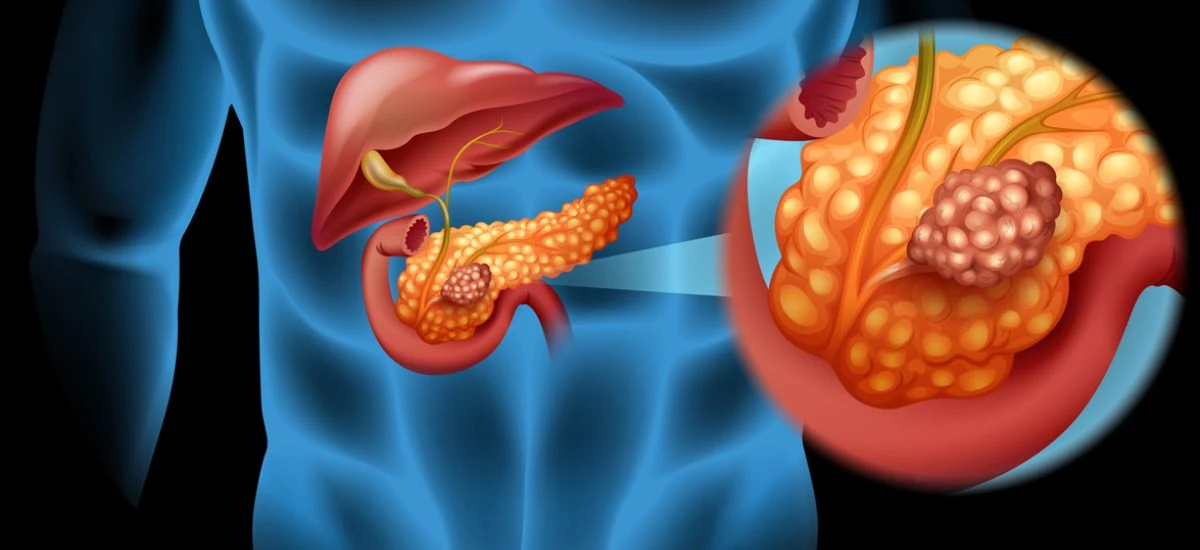
The pancreas sits behind the stomach, performing two vital functions: producing digestive enzymes (exocrine) and secreting hormones, including insulin (endocrine). Pancreatic ductal adenocarcinoma (PDAC) arises from the cells lining the pancreatic ducts and accounts for 90–95% of all pancreatic malignancies. The well-known poor prognosis of PDAC stems primarily from late diagnosis; the pancreas is deep in the abdomen, and early tumors cause no symptoms. Other pancreatic tumors, neuroendocrine tumors (NETs), and cystic neoplasms (IPMN, MCN) carry significantly better prognoses and are increasingly detected incidentally on imaging.
Warning Signs and Symptoms
- Painless, progressive jaundice yellowing of skin and whites of the eyes.
- Dark urine the colour of strong tea, with pale or clay-coloured stools.
- Persistent upper abdominal pain radiating through to the back.
- Rapid, unexplained weight loss often the first symptom patients notice.
- New-onset diabetes in a person without known risk factors or family history.
- Sudden worsening of previously well-controlled diabetes.
- Loss of appetite and persistent nausea.
- Whole-body itching from bile salt accumulation in jaundiced patients.
Paradoxically, pancreatic head tumors often cause jaundice early, increasing the likelihood of finding them at a resectable stage. Body and tail tumors remain silent far longer.
Diagnosis at GEM Cancer Centre
- Contrast-enhanced pancreatic protocol CT – primary staging investigation; evaluates tumour size, vessel contact, and metastases.
- MRI/MRCP – superior for bile duct involvement and cystic lesion evaluation.
- Endoscopic Ultrasound (EUS) with fine needle aspiration – tissue confirmation and detailed local staging.
- PET-CT – identifies occult distant metastases before planning major surgery.
- CA 19-9 tumour marker – monitors treatment response and detects recurrence.
- Molecular profiling (KRAS, BRCA1/2, NTRK, MSI) – identifies targeted therapy eligibility.
- ERCP or PTC biliary drainage – relieves jaundice from bile duct obstruction before surgery or chemotherapy.
- Blood tests – liver function, bilirubin, renal function, complete blood count.
Treatment Options at GEM Cancer Centre
Robotic Whipple Procedure (Pancreaticoduodenectomy)
The Whipple operation is among the most complex abdominal surgeries performed in oncology, removing the head of the pancreas, duodenum, gallbladder, bile duct, and part of the stomach, then reconstructing three digestive connections. GEM Cancer Centre performs this through small incisions with exceptional robotic precision, reducing blood loss, postoperative complications, and hospital stay. Surgical volume and expertise directly determine Whipple surgery outcomes.
Robotic Distal Pancreatectomy
For cancers in the body or tail, robotic distal pancreatectomy with splenectomy achieves radical lymphadenectomy and vessel dissection with precision, which is important for achieving negative surgical margins (R0 resection), the most critical predictor of long-term survival.
Neoadjuvant Therapy for Borderline Resectable Disease
When the tumor contacts major blood vessels, FOLFIRINOX-based chemotherapy or gemcitabine plus nab-paclitaxel is given first to shrink the tumor away from vessels, potentially converting borderline cases to resectable ones. This strategy has significantly expanded the proportion of patients who can be offered curative surgery.
Stereotactic Body Radiotherapy (SBRT)
For locally advanced pancreatic cancer that cannot be removed surgically, high-dose ablative SBRT delivered over 3–5 TrueBeam sessions achieves excellent local tumor control and may convert some tumors to resectability.
Targeted Therapy and Systemic Options
For BRCA1/BRCA2-mutated pancreatic cancers, PARP inhibitor maintenance therapy (olaparib) after platinum-based chemotherapy significantly extends progression-free survival. Standard systemic therapy options include FOLFIRINOX and gemcitabine plus nab-paclitaxel, selected based on patient fitness.
Why Choose GEM Cancer Centre?
- Dedicated pancreatic and hepatobiliary surgical expertise the most critical factor in Whipple surgery outcomes.
- Robotic Whipple and distal pancreatectomy programme.
- TrueBeam SBRT for locally advanced unresectable disease.
- BRCA and molecular testing identifying targeted therapy opportunities.
- Gastrointestinal tumour board urgent review for all pancreatic cancer cases.
- Fastest diagnostic pathway in Tamil Nadu reducing time to treatment decision.
Frequently Asked Questions
What percentage of pancreatic cancer patients can have surgery?
Only 15–20% of pancreatic cancer patients present with immediately resectable disease. Another 30% have a borderline resectable disease that may become resectable after neoadjuvant chemotherapy. The remaining 50–60% have metastatic disease where surgery is not curative reinforcing why early diagnosis is so consequential.
What is the recovery after a Whipple procedure?
The Whipple procedure requires a hospital stay of 7–10 days. Full recovery takes 6–8 weeks. The most common complications include delayed gastric emptying, pancreatic fistula, and infection. Our robotic approach and enhanced recovery protocols minimize these risks and speed recovery significantly.
Will I develop diabetes after pancreatic surgery?
After the Whipple procedure, new diabetes occurs in only 10–20% of patients; the remaining pancreatic tissue usually maintains adequate insulin production. Distal pancreatectomy carries a higher risk of 30–50% because more islet cells are removed. Our endocrinology team monitors and manages post-surgical glucose metabolism closely.
Is FOLFIRINOX better than gemcitabine for pancreatic cancer?
For patients with excellent performance status, FOLFIRINOX shows superior survival compared to gemcitabine in both metastatic and neoadjuvant settings but has significantly more side effects. GEM Cancer Centre's medical oncology team evaluates each patient's fitness carefully and recommends the regimen best balancing efficacy with tolerability.
Should family members of pancreatic cancer patients be screened?
Yes, if there is a strong family history or known genetic mutation (BRCA2, PALB2, or Lynch syndrome). High-risk surveillance using annual MRI/MRCP and endoscopic ultrasound is recommended from age 50 or 10 years before the youngest affected relative's diagnosis. GEM Cancer Centre's genetic counseling team designs appropriate surveillance programs.
What is the best pancreatic cancer treatment available in Coimbatore?
GEM Cancer Centre provides robotic Whipple surgery, distal pancreatectomy, TrueBeam SBRT, FOLFIRINOX-based neoadjuvant therapy, and PARP inhibitor targeted therapy for BRCA-mutated disease We are among the very few centers in Tamil Nadu with dedicated pancreatic surgical oncology expertise.




 Call Now

