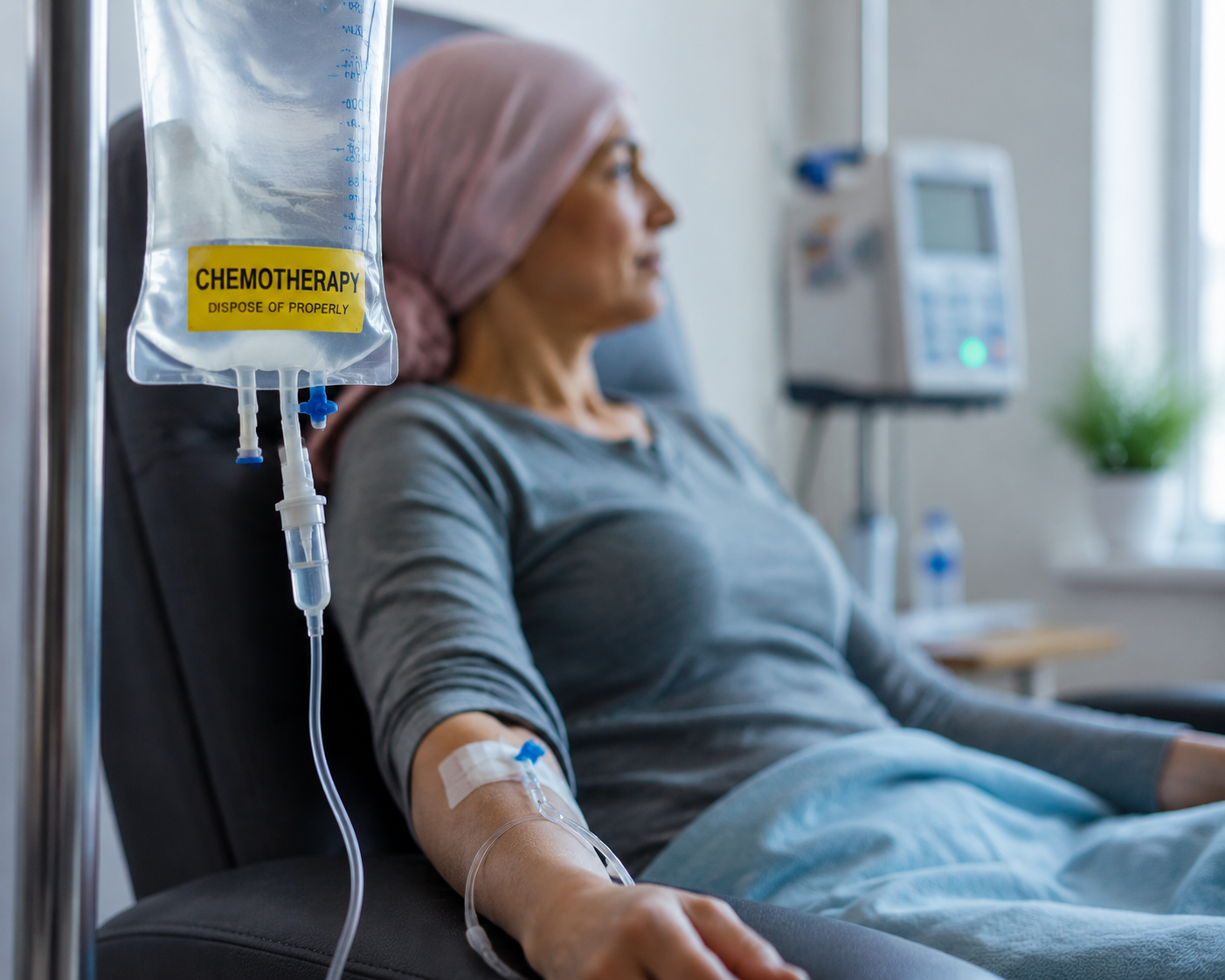
Chemotherapy is a cancer treatment that uses powerful anti-cancer drugs to destroy or slow the growth of cancer cells in the body. It works by targeting rapidly dividing cells and is one of the most commonly used and effective treatments for many types of cancer.
Chemotherapy may be recommended for patients diagnosed with cancer such as breast cancer, lung cancer, blood cancer, colorectal cancer and other solid tumors. It can be used alone or in combination with surgery, radiation therapy, or other advanced cancer treatments depending on the stage and type of cancer. At Our Cancer Centre, we provide advanced chemotherapy treatments in Coimbatore with personalized care plans designed for each patient.
Chemotherapy is administered in a controlled clinical setting under the supervision of experienced medical and clinical oncologists. The treatment may be given intravenously (through a vein), orally as tablets or capsules, or through other specialized delivery methods depending on the treatment plan.
Each chemotherapy cycle is carefully planned to maximize cancer cell destruction while allowing the body time to recover between sessions. Our oncology team closely monitors every patient to manage side effects and ensure safe and effective treatment outcomes.
You will meet our oncologist at Our Cancer Centre for diagnosis review, treatment planning and chemotherapy schedule preparation.
Blood tests and health evaluations are done to ensure you are fit for chemotherapy and to determine the correct dosage.
Chemotherapy drugs are administered through IV infusion or oral medication in a controlled hospital environment with continuous monitoring.
Patients are observed after treatment and provided with medications and guidance to manage side effects and support recovery.
Our Cancer Centre is a trusted cancer Hospital in Coimbatore offering advanced chemotherapy treatments with expert medical oncologists, personalized treatment planning and comprehensive cancer care under one roof.
With modern oncology infrastructure, experienced specialists and a patient-focused approach, we ensure safe, effective and compassionate chemotherapy care for patients across Coimbatore and surrounding regions.
Watch expert oncologists explain chemotherapy treatments, biomarker testing, and patient care.